
The Digital Hangover: Why NZ Schools Must Rethink BYOD
For over a decade, Bring Your Own Device/Distraction/Disaster has been the shiny centrepiece of some New Zealand classrooms. It was sold as a digital revolution, a way to "future-proof" our kids by giving them ubiquitous access to the world’s information.
But as the dust settles, a growing chorus of educators and parents is asking a hard question: Was this actually a good idea?
The tide is already turning across the ditch. From January 2027, the Australian state of Victoria will ban BYOD in primary schools and cap screen time at 90 minutes per day. It’s a move that feels radical, yet somehow inevitable. If we look closely at the "BYOD experiment" in Aotearoa, it’s clear we might be overdue for a similar reckoning.
1. The "Wild West" Classroom
When schools own the devices, they own the ecosystem. They manage the charging strategies, apps, browser performance and updates. And as the school owns the devices, teachers feel more empowered to control student access to them. BYOD threw that control out the window.
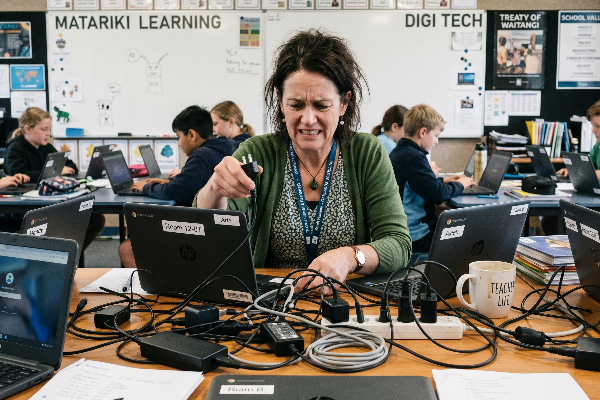
Teachers suddenly found themselves managing a "Wild West" of technology. One student has a top-of-the-line MacBook; another has a five-year-old Windows Laptop with a flat battery that won’t connect to the Wi-Fi; a third is distracted by a game their parents forgot to restrict. Instead of teaching, some educators felt more like IT support, struggling to optimise workflows across a fragmented mess of hardware.
2. The Great Participation Gap
While intended to democratize learning, BYOD often highlighted inequality.
BYOD normalises 1:1 access to screens in a classroom - this, in turn, negatively impacts teacher/student relationships and student learning outcomes. When the average cognitive bell curve in our classrooms is 3-5 years, it cannot be effective to have all students on screens at the same time. A much better approach is outlined in this blog post
Financial Strain: Asking families to shell out hundreds (or thousands) for hardware creates immediate "haves and have-nots."
Social Friction: The playground hierarchy can quickly adapt to those with the latest tech, adding unnecessary social pressure to the lives of learners.
3. Investment vs. Return
We’ve poured massive amounts of time and money into these programs, but the data isn’t demonstrating successes that are proportionate to this. Against a backdrop of deteriorating student achievement scores in literacy and numeracy, it is difficult to argue that ubiquitous screen time has been the "silver bullet" we were promised.
4. The Screentime Crisis
We are currently in a heated global conversation about the negative effects of social media and excessive digital consumption on child development. By mandating BYOD, schools effectively integrated the primary source of that distraction into the heart of the learning day. In addition, it often provided students with the temptation to use their BYOD device at home, for many activities that were NOT related to learning.
"After 10 years of providing ubiquitous access to screens, is it time to review the wisdom of this investment?"
Is it time for "BYOD RIP"?
The intentions behind BYOD were noble: we wanted our kids to be tech-literate. But literacy doesn't require 24/7 access. Victoria’s shift toward school-owned, limited-use devices offers a glimpse into a more balanced future, one where technology is a specific tool used for a specific purpose, rather than a permanent digital barrier between a student and their teacher.
New Zealand primary schools have a choice: do we keep doubling down on a "Wild West" digital strategy, or do we follow the lead of our neighbours and reclaim the classroom for focused, low-distraction learning?
The "delete" key has never looked so tempting. What do you think?