
Search and Rescue: Escaping the Cycle of Student Dependency
Search and rescue describes the process by which many well-meaning, hard-working, and courageous people give up their time and energy to search for and rescue people who have typically become lost at sea, on a mountain or in the bush. It is life-saving work, with a mix of disappointments and celebrations, depending on the outcome of each mission. In some cases, the people who have become lost are lacking in knowledge, experience and equipment - and this can quickly amplify small problems into much bigger ones. In some cases, the need for a search and rescue operation could be avoided with better preparation and planning.
In school, “Search and Rescue” is the name I give to a classroom strategy(?) that I have observed in many schools. It’s a troubling blend of behaviours that can boost the self-esteem of a teacher whilst robbing a student of theirs.
This is what it might look like:
The teacher sets the class up with a written task.
Despite the 3 to 5 year spread in cognitive capability in the classroom, there is only one version of the task, backfilled with lots of teacher talk to address areas of confusion and uncertainty.
Typically, the instructions are on the whiteboard, and the students are faced with a blank piece of paper or a blank Google Doc to respond to the task.
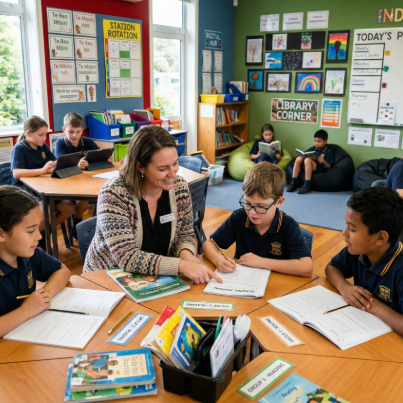
Search and rescue begins when the teacher stops talking and starts to circulate around the room, answering many questions, some of which are repeated.
In a classroom where there are excessive and/or repeated student questions, it can indicate some or all of the following:
The task lies beyond the ZPD* of the student - ie the task is not adequately scaffolded or differentiated
The task may well be within the ZPD* of the student in theory, but it is presented or designed in ways which needlessly induce feelings of cognitive overload within the student.
The student has become conditioned into not trying and simply waits to be rescued.
*ZPD - Zone of Proximal Development
Over time, these behaviours can combine together to focus the students on the short-term aspects of task completion rather than the more substantive and autonomous aspects of learning. Over time, the quality of teacher/student relationships and the confidence and capability of the students may suffer, resulting in students confusing the creative challenge of learning with the compliance-based drudgery of task completion, accompanied by lots of step-by-step teacher assistance. There is often little accountability or support for the students who become reluctant to ask multiple questions, opting instead to passively drift towards the bell, without completing the task.
In search and rescue classrooms, the time and focus of the teacher can be dictated by the number of student questions, rather than their time and expertise being targeted at small, capability-based groupings of students in Station Rotations.
A well-designed task will include the following components:
Instructions that are scaffolded and differentiated to meet the needs of all students.
Worked examples that prompt students to think about and understand what success might or might not look like (terrible examples can be more thought-provoking and motivating than perfect examples).
A rubric that encourages multiple formative feedback cycles.
In addition to these, at least 80% of the task should be achievable by each student, on their own, without incremental, repeated and disruptive requests for help.
The many highlights of my work with schools are visible when all of these new habits and strategies are adopted by courageous teachers who move from rescuing students from predictable and unproductive habits, so that they can truly develop and flourish as independent learners.