GRR - The Needle Is Stuck!
In our recent blog post about the classroom phenomenon of “Search and Rescue”, we outlined how some well-intentioned teachers can inadvertently miss out on huge opportunities to boost student outcomes.
This blog post seeks to link these ideas to the expectations of Te Mātaiaho, our Curriculum document. There is an understandable lack of clarity about some of the intentions of this document, and this article seeks to address a few key issues:
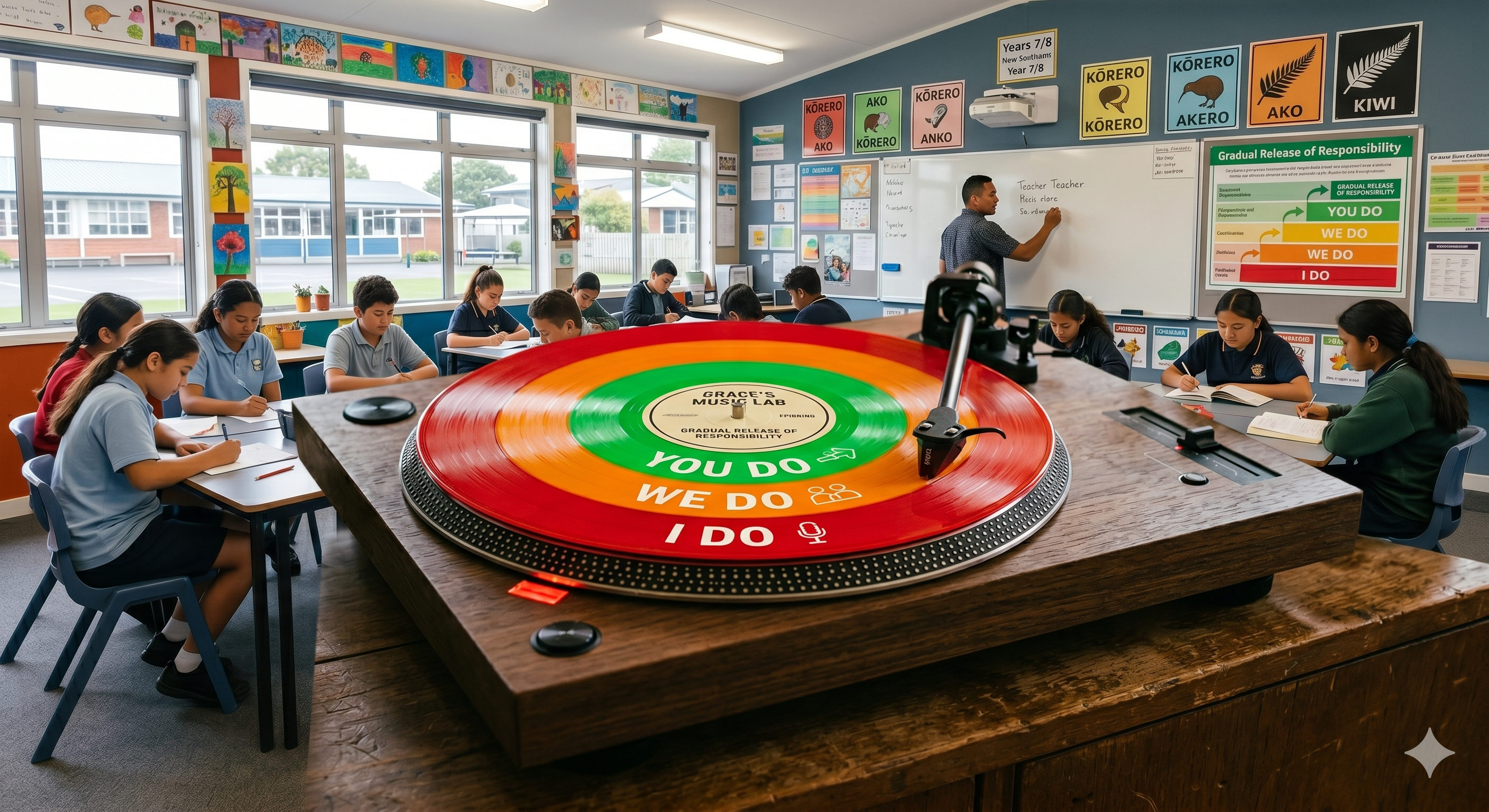
The “I do, We do, You do” model has been retained - this is also referred to as The Gradual Release of Responsibility (GRR).
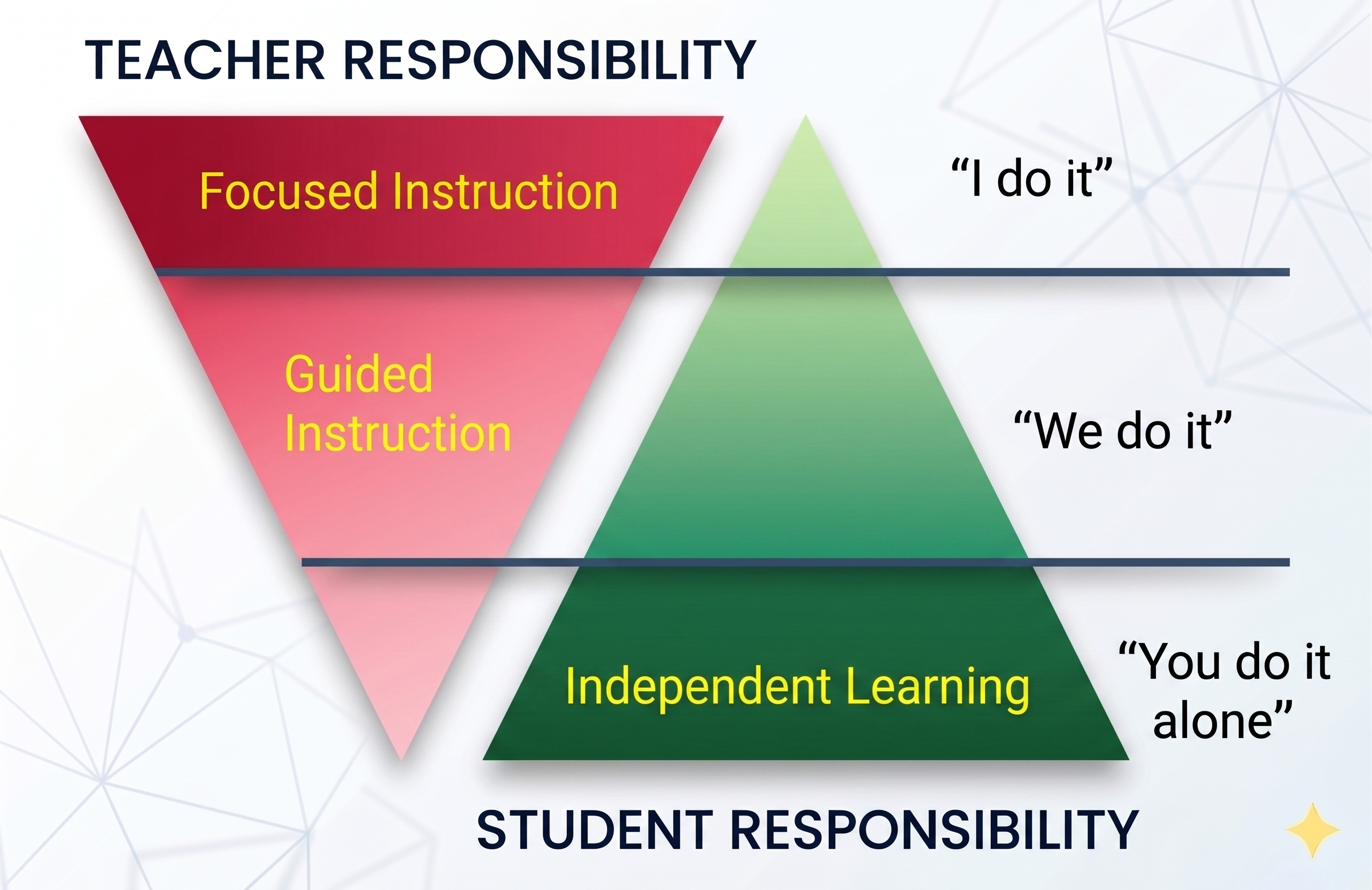
In too many classes that I first visit, the needle is stuck at the guided instruction stage - meaning that the ongoing focus is on Task Completion, instead of Learning. Learning, by definition, is the regular transfer of new information between working memory and long-term memory - this involves the creation of meaning and the “velcroing” of new knowledge to existing knowledge. This is a deeply personal process and happens when the teacher-led scaffolding of focused and guided instruction fades out, and the student completes the learning task on their own. When this is followed by a formative feedback cycle that is Fast, Multi-modal, and then Actioned, new learning is strengthened and retained.
The good news is that teachers very quickly engage with these new ways of working, so that student outcomes improve and teacher workload issues are often reduced.
Come along to our InterfacExpo26 workshop to learn more about this exciting process.
The Gradual Release of Responsibility (GRR)
The GRR framework is designed to shift the cognitive load from teacher to student, moving learners from guided support to independent mastery. In Aotearoa, this aligns perfectly with ako—where the roles of teacher and learner are fluid and reciprocal.
The GRR Flow
"I Do" (Focused Instruction): Teacher models the skill using "think-alouds" and explicit strategies.
"We Do" (Guided Instruction): Scaffolding and immediate feedback build student confidence.
"You Do" (Independent Learning): Students apply learning solo or collaboratively, reducing reliance on the teacher.
Key Applications in Aotearoa
Structured Literacy (Years 0–8): Essential for Te Reo Matatini and Rangaranga Reo ā-Tā, using GRR to build decoding and encoding automaticity.
Literacy Acceleration: Provides the intensive, explicit instruction needed for small-group intervention.
PB4L: Explicitly teaching social behaviours and classroom routines.
Insights for Practice
Strategic Fading: Success depends on intentionally "fading" teacher support so independence can flourish.
Professional Noticing: High-impact teachers use "noticing" to gauge when to accelerate or slow down the release based on student readiness.
Wide-Channel Tasks: Use tasks with "scope" that allow for multiple entry points, respecting the diverse linguistic and cultural knowledge students bring to the table.